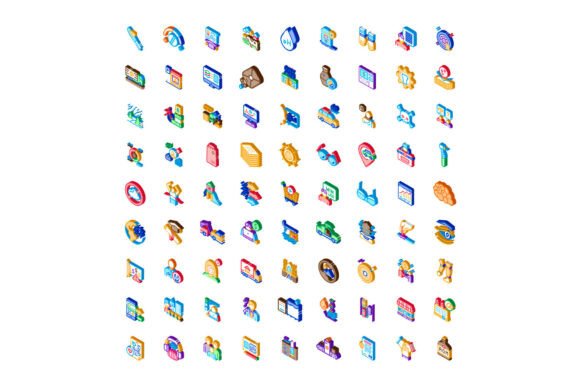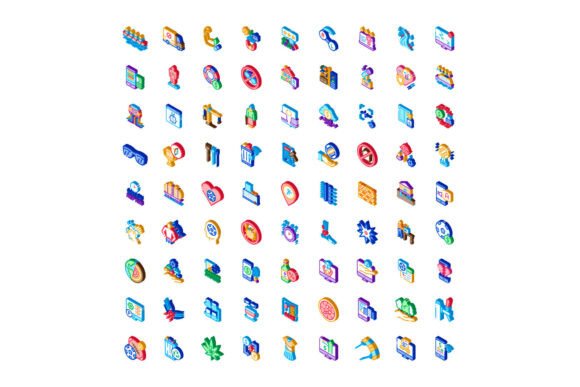
Isometric Set Representing Various Business Concepts
Visual communication plays a crucial role in how we convey complex ideas, especially in professional and digital environments. An Isometric Set Representing Various Business Concepts offers a powerful way to simplify abstract ideas through engaging, three-dimensional illustrations. These sets typically include a large collection of colorful isometric icons that illustrate diverse business concepts, technology solutions, industry elements, and everyday objects. Whether you're designing a website, building a presentation, or creating marketing materials, these visual tools can enhance clarity and engagement.
Why Visual Clarity Matters in Business Communication
In today's fast-paced digital world, attention spans are short. Information must be delivered clearly and quickly. Isometric visuals help break down complex processes into digestible, visually appealing graphics. For example, a flowchart explaining a supply chain can become more intuitive when represented with isometric icons showing trucks, warehouses, and delivery routes. This kind of visual aid helps audiences grasp ideas faster and retain information longer.
Professionals across industries—from entrepreneurs explaining business models to educators teaching project management—can benefit from using these visual tools. The Isometric Set Representing Various Business Concepts is particularly effective because it offers a consistent visual style across a wide range of topics, ensuring that your materials look cohesive and professional.
How Isometric Graphics Improve Design Efficiency
Designing from scratch can be time-consuming, especially when working on tight deadlines. A large collection of colorful isometric icons gives designers and non-designers alike a ready-made toolkit to build visuals quickly. Whether you're illustrating a SaaS dashboard, a marketing funnel, or an organizational chart, these icons can be combined and customized without requiring advanced design skills.
For instance, a freelance marketer preparing a proposal for a new client can use pre-designed isometric icons to show different marketing channels—social media, email, SEO—without needing to create each image manually. This not only saves time but also ensures a polished, consistent look across all materials.
Supporting Creativity Without Limiting Flexibility
While many design tools offer templates and icons, the flexibility of an isometric set allows for creative combinations that still maintain a unified aesthetic. Designers can mix and match icons from different categories—business, technology, logistics, or personal productivity—to build unique compositions that reflect specific messaging or branding needs.
Consider a startup creating a landing page to explain its new project management app. Using an isometric set, they can combine icons representing task lists, calendars, team collaboration, and cloud storage to visually explain how the app works. This approach not only enhances user understanding but also reinforces brand identity through a consistent visual language.
Real-World Applications Across Professions
The value of an Isometric Set Representing Various Business Concepts extends across a wide range of fields. Here are a few examples of how different professionals can benefit:
- Entrepreneurs pitching ideas to investors can use isometric visuals to simplify complex business models and growth strategies.
- Bloggers and educators can illustrate tutorials or explainers with engaging, easy-to-follow diagrams.
- Marketers can create visually appealing infographics and social media assets that explain product features or customer journeys.
- Developers and product designers can use isometric icons in dashboards and user interfaces to improve usability and visual appeal.
Even small business owners who aren’t designers can use these icons to create better presentations, signage, or internal documentation without hiring a professional designer.
Choosing the Right Set for Your Needs
Not all isometric icon sets are created equal. When selecting a collection, consider the following factors:
- Relevance: Does the set include icons that match your industry or topic? A general business set may not be ideal for a tech-focused startup.
- Consistency: All icons should share the same style, color palette, and perspective to maintain visual harmony.
- Customizability: Can you easily adjust colors, sizes, or combine icons to suit your specific needs?
- Licensing: Make sure the icons are available under a license that matches your intended use—personal, commercial, or resale.
It’s also helpful to preview how the icons look in real-world applications. Some sets may appear clean and modern in a preview but become cluttered when used in a complex diagram or on a mobile screen. Testing a few icons before purchasing a full set can save time and ensure a better fit.
Limitations and Considerations
While isometric icons offer many benefits, they’re not a one-size-fits-all solution. In some cases, flat icons or custom illustrations may be more appropriate, especially when simplicity or minimalism is key. Additionally, isometric graphics can sometimes be more detailed than necessary, potentially overwhelming users if not used thoughtfully.
It's also important to balance visual appeal with accessibility. Ensure that color choices provide sufficient contrast and that icons are clear even at smaller sizes. For users with visual impairments, pairing icons with text labels can enhance comprehension.
Final Thoughts
The Isometric Set Representing Various Business Concepts is more than just a design trend—it's a practical tool that supports clearer communication, faster design workflows, and stronger visual storytelling. Whether you're building a website, preparing a presentation, or creating marketing materials, these icons can help you convey ideas more effectively and professionally.
By investing in a high-quality, well-matched set, professionals across industries can streamline their design process, enhance audience engagement, and communicate complex ideas with clarity. As visual content continues to dominate digital platforms, having the right visual tools at your fingertips is no longer a luxury—it's a necessity.