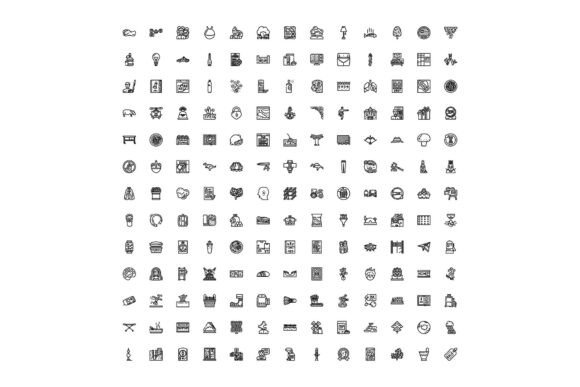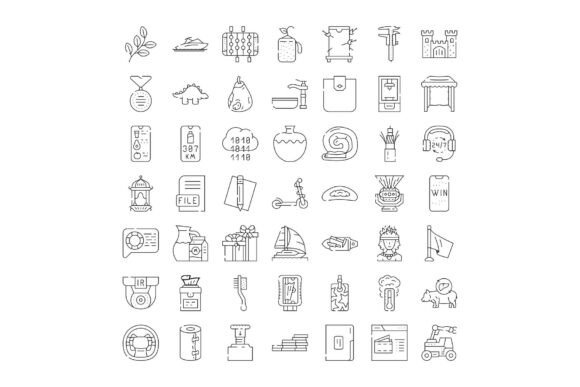
Line Icons Collection with Various Objec: Enhancing Visual Communication Across Digital Platforms
Understanding the Role of Line Icons in Modern Design
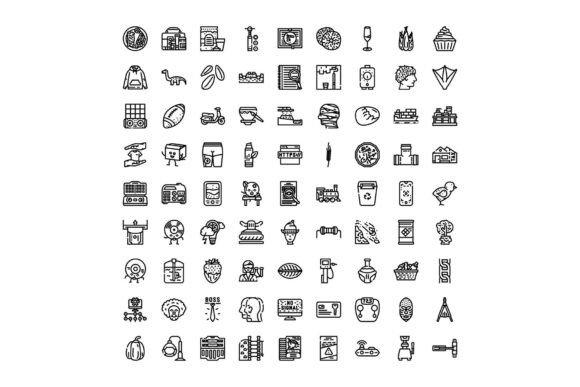
Visual communication has become a cornerstone of effective digital interaction. Among the many tools that designers use to convey ideas clearly and efficiently, line icons have emerged as essential elements. The Line Icons Collection with Various Objec provides a versatile set of thin line icons that span across categories such as technology, nature, daily activities, and abstract concepts. These icons are not just decorative; they serve as intuitive visual cues that guide users, enhance aesthetics, and streamline information delivery.
Line icons, particularly those in this collection, are characterized by their minimalist design. Each icon uses clean, continuous strokes to represent an object or idea, making them ideal for interfaces where clarity and simplicity are key. Whether used in mobile apps, websites, dashboards, or educational materials, these icons help users process information more quickly and effectively.
Key Characteristics of the Line Icons Collection
The Line Icons Collection with Various Objec stands out due to several defining features:
- Minimalist Style: Thin lines and uncluttered shapes ensure icons remain legible across different screen sizes and resolutions.
- Comprehensive Coverage: The collection includes icons for a wide array of subjects, from household items and transportation to abstract ideas like innovation and collaboration.
- Scalability: Being vector-based, these icons can be scaled without loss of quality, making them suitable for both small mobile screens and large banners.
- Customization: Designers can easily adjust colors, stroke widths, and other properties to match brand guidelines or design themes.
Use Cases Across Different Industries
One of the most compelling aspects of the Line Icons Collection with Various Objec is its adaptability. Here are some examples of how it can be applied across various fields:
- Technology & Software: Interface designers use these icons to represent features like settings, notifications, cloud storage, and user profiles. Their simplicity ensures that even complex dashboards remain user-friendly.
- Education: Teachers and instructional designers incorporate line icons into presentations and learning modules to illustrate concepts such as time management, research, and collaboration.
- E-commerce: Online retailers use these icons to enhance product categorization, navigation menus, and promotional banners. Icons for delivery, returns, and customer support improve user experience by reducing textual clutter.
- Health & Wellness: Apps and websites in this sector utilize icons for fitness routines, dietary tracking, and mental health resources. The clean lines convey professionalism and approachability.
- Travel & Tourism: Travel platforms integrate these icons to represent destinations, activities, and amenities, making it easier for users to plan trips and explore options.
Advantages of Using Thin Line Icons in Design Projects
Designers increasingly favor thin line icons like those in the Line Icons Collection with Various Objec due to several practical advantages:
- Improved Readability: The absence of heavy fills or complex textures allows icons to be recognized quickly, even at small sizes.
- Timeless Aesthetic: Unlike trend-driven designs, line icons have a classic appeal that remains relevant over time.
- Responsive Design Compatibility: These icons integrate seamlessly into responsive layouts, ensuring visual consistency across devices.
- Reduced Cognitive Load: Users can interpret line icons with minimal effort, making them especially effective in multilingual interfaces.
Design Considerations for Effective Icon Use
While the Line Icons Collection with Various Objec offers a robust toolkit, effective implementation requires thoughtful design decisions:
- Consistency: Ensure that all icons within a project follow the same style, stroke width, and color palette to maintain visual harmony.
- Contextual Relevance: Choose icons that accurately represent the function or concept they are associated with. Misleading icons can confuse users.
- Accessibility: Provide text labels or alt descriptions for icons to accommodate users with visual impairments or screen readers.
- Spacing and Layout: Avoid overcrowding icons within a layout. Sufficient spacing enhances clarity and prevents visual fatigue.
Comparing Line Icons to Other Icon Styles
When selecting an icon style for a design project, it’s helpful to compare line icons with other popular styles such as solid icons, glyph icons, and flat icons. Each has its own strengths and ideal use cases:
- Solid Icons: Often used for emphasis or in high-contrast environments, but can appear heavy in minimalist designs.
- Glyph Icons: Similar to line icons but usually more detailed, which can complicate readability at smaller sizes.
- Flat Icons: Characterized by two-dimensional shapes and vibrant colors. While visually appealing, they may not offer the same level of subtlety as line icons.
For projects that prioritize elegance, clarity, and adaptability, the Line Icons Collection with Various Objec offers a balanced solution that bridges the gap between form and function.
Real-World Examples of Line Icon Implementation
Several well-known platforms and brands have successfully integrated line icons into their design systems:
- Slack: Uses line icons to differentiate between channels, notifications, and user actions without overwhelming the interface.
- Google Material Design: Incorporates line-style icons in its design language to maintain a clean and intuitive user experience.
- Canva: Offers a wide range of line icons, including those similar to the Line Icons Collection with Various Objec, for users creating presentations, social media graphics, and marketing materials.
These examples illustrate how line icons contribute to a cohesive and user-centric design strategy across different digital environments.
Future Trends in Icon Design and the Role of Line Icons
As digital design continues to evolve, so too do the expectations around iconography. Several trends are shaping the future of icon design:
- Dynamic Icons: Icons that change appearance based on user interaction or context are gaining popularity, and line icons provide a flexible foundation for such animations.
- Personalization: Users increasingly expect interfaces that adapt to their preferences, and customizable line icons support this trend through color and style variations.
- Augmented Reality (AR) Interfaces: As AR becomes more mainstream, line icons may be used to guide users through immersive experiences without visual overload.
The Line Icons Collection with Various Objec is well-positioned to meet these emerging needs due to its versatility, clarity, and scalability. Designers can rely on this collection to create interfaces that are not only functional but also future-ready.
Integrating Line Icons into Your Workflow
Whether you're a seasoned designer or just starting out, incorporating the Line Icons Collection with Various Objec into your projects can be done efficiently with the right approach:
- Choose the Right Format: Most line icons are available in SVG format, which is ideal for web use due to its scalability and editability.
- Use Design Tools: Platforms like Adobe Illustrator, Figma, and Sketch support SVG icons and allow for easy customization.
- Optimize for Performance: Compress SVG files to reduce load times, especially when using large icon sets.
- Test Across Devices: Preview icons on different screens to ensure they remain legible and consistent in appearance.
Conclusion
The Line Icons Collection with Various Objec represents a powerful resource for anyone involved in digital design. Its combination of aesthetic appeal, functional clarity, and adaptability makes it a valuable asset across a wide range of applications. Whether you're designing a website, a mobile app, educational content, or a user interface, these icons can enhance your visual communication strategy and improve the overall user experience.